


Endodontic case report by Andreas Louloudiadis (UK)

Root canal treatment on molars with calcified canals always demands precision, patience, and the right instruments. This lower molar presented with a severely calcified pulp chamber, extremely long and narrow canals exceeding 25 mm, and — to add to the challenge — it was a classic “hot tooth“that resisted anesthesia.
Despite the anatomical complexity and clinical urgency, careful technique and advanced instrumentation allowed for a conservative, centered preparation and a successful three-dimensional seal.
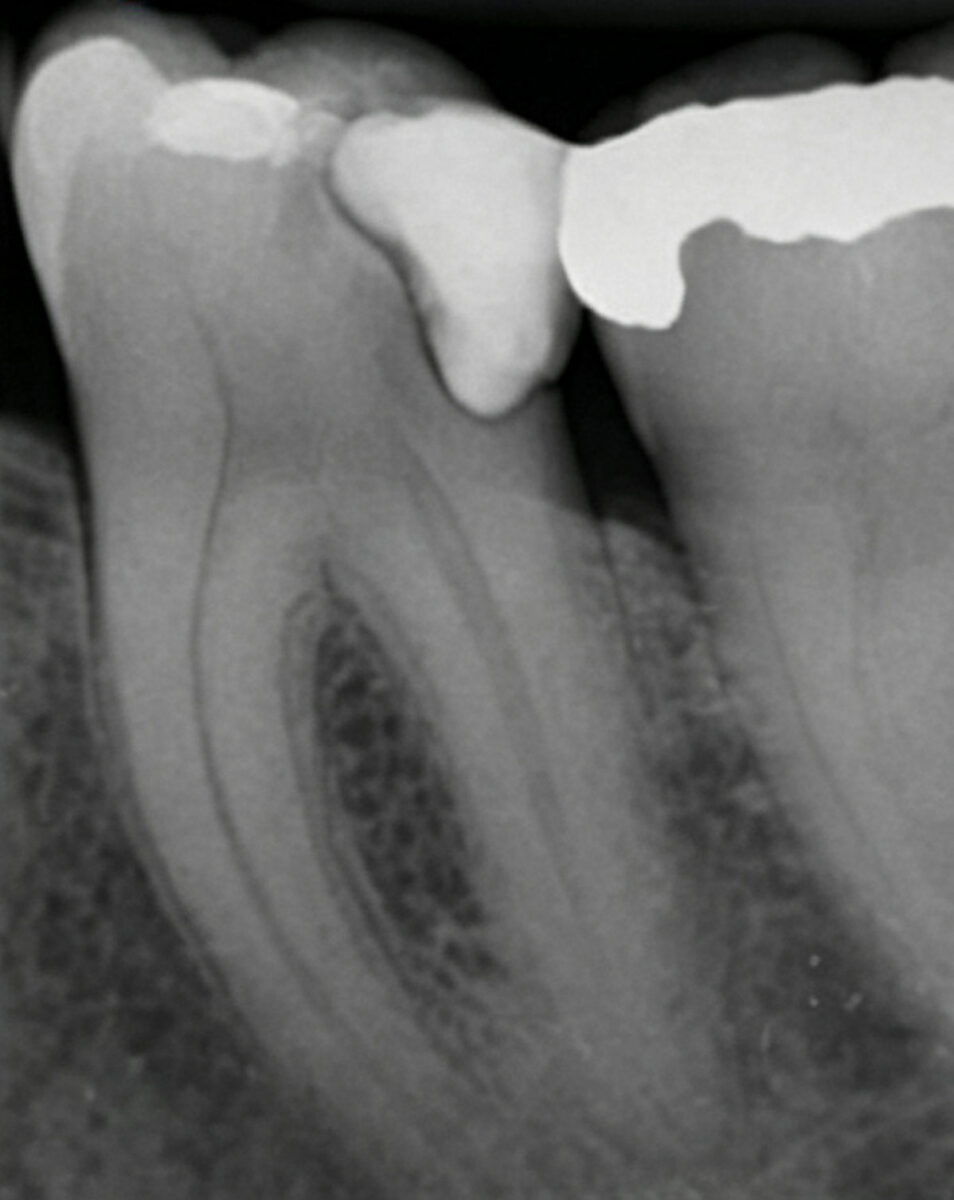
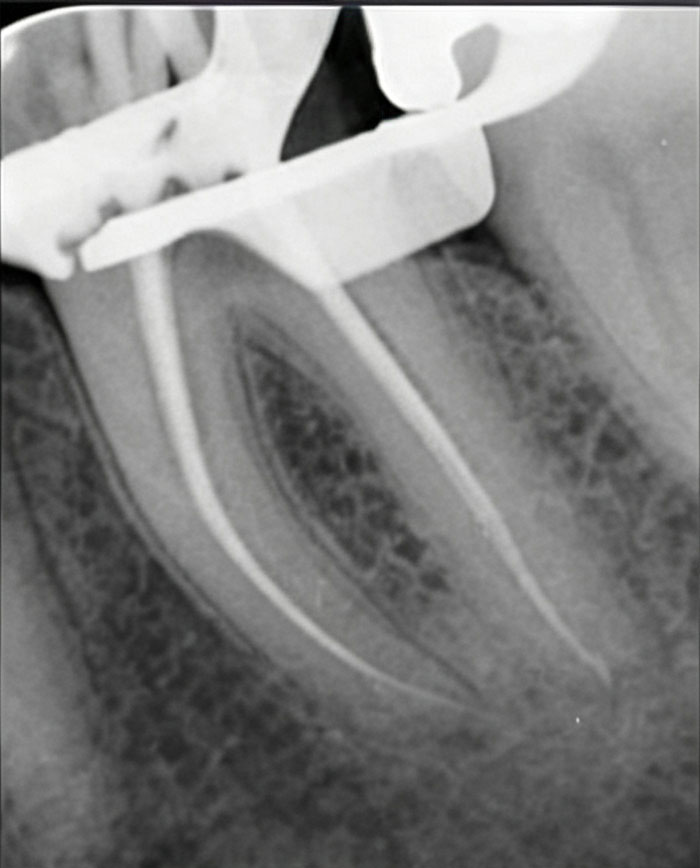
Case Diagnosis
Symptomatic irreversible pulpitis in a lower molar.
Clinical and radiographic findings revealed:
- Severe pulp chamber calcification
- Four canals, each extremely long (>25 mm) and narrow
- Vertucci Type II (2-1) configuration in both the mesial and distal roots — two canals converging into a single foramen per root
Key Challenges
- Safely negotiating and shaping four long, narrow, calcified canals
- Managing converging apical anatomy without transportation or perforation
- Working on a “hot tooth” where profound anesthesia was difficult to achieve
- Preserving as much pericervical and radicular dentin as possible while achieving adequate cleaning
Treatment Approach
Access and Canal Location
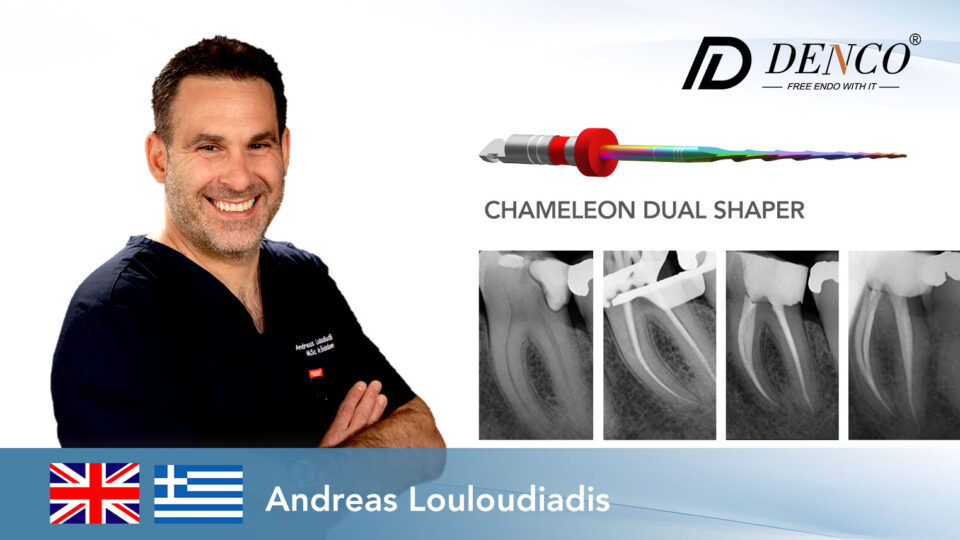
After achieving access, ultrasonic refinement of the cavity was essential to carefully remove calcifications without compromising the remaining tooth structure. This allowed the location and negotiation of all four canals. The final anatomy confirmed the Vertucci Type II (2-1) configuration in both roots, with canals merging before exiting through a single apical foramen each.
Shaping with DENCO Chameleon Dual Shaper
The canals were shaped using the DENCO Chameleon Dual Shaper. This system’s martensitic heat-treated alloy, dual cross-section design, non-cutting tip, and enhanced flexibility proved ideal for this constricted and complex anatomy.
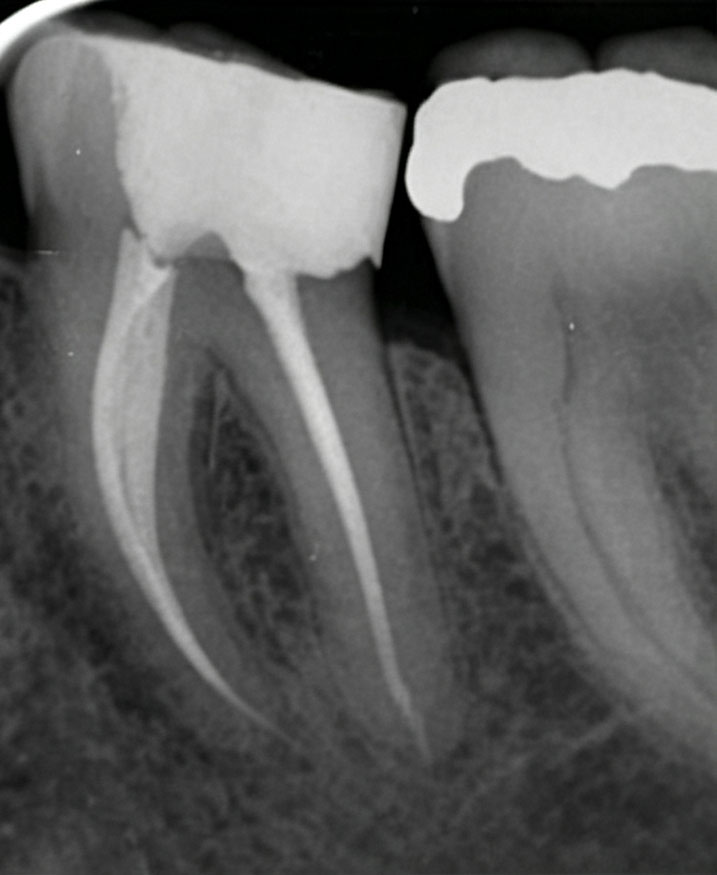
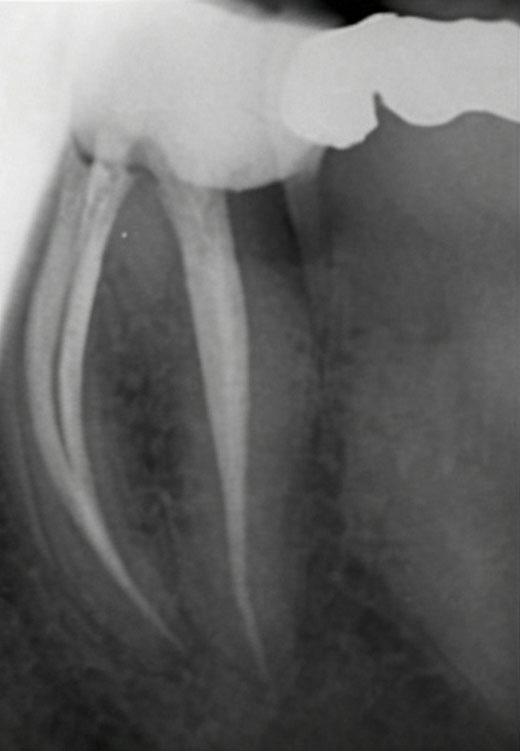
The instrument maintained the original canal path, ensured excellent centering, and allowed safe progression through the long, narrow canals while performing a highly conservative preparation. The final radiograph shows respect for the root anatomy and excellent preservation of dentin.
When anatomy pushes back, Chameleon adapts.
Irrigation Protocol
Thorough disinfection is critical in calcified canal cases where mechanical instrumentation has limitations. The protocol included:
- 5.25% NaOCl
- 17% EDTA
- EDDY sonic activation for enhanced penetration into uninstrumented areas and lateral canals
- Final rinse with distilled water
This combination ensured cleaning beyond the reach of the instruments, particularly important in converging Vertucci Type II anatomy.
Obturation
Obturation was completed using a bioceramic sealer. Its excellent flow characteristics were particularly advantageous in sealing the complex converging anatomy, achieving a dense, three-dimensional fill.
Final Outcome
The postoperative radiograph demonstrates:
- Conservative, centered preparations
- Preserved dentin structure
- Well-sealed converging canals with a single foramen per root
Shape conservatively. Clean thoroughly. Fill three-dimensionally.
Why This Matters
Cases involving severely calcified canals and unusual root canal configurations like Vertucci Type II highlight the importance of selecting instruments that offer flexibility, safety, and centering ability. The DENCO Chameleon Dual Shaper performed exceptionally well under these demanding conditions, allowing predictable management of a challenging “hot” molar while prioritizing long-term tooth survival through dentin preservation.