

Clinical Case Portfolio — DENCO
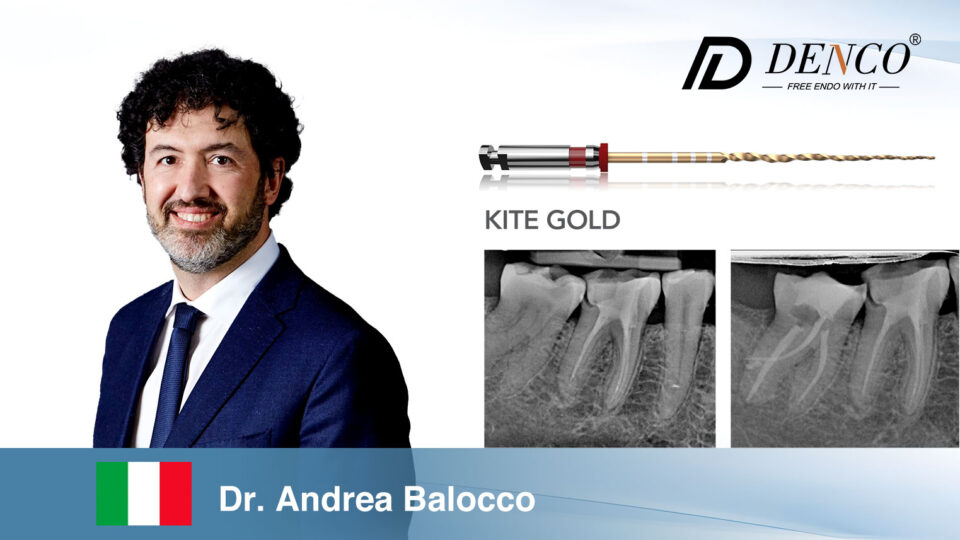
Case #1 by Dr.Andrea Balocco

Radix Entomolaris is one of the most demanding anatomical variations in mandibular molars. This case demonstrates the successful management of a lower right first molar with a supernumerary disto-lingual root presenting severe curvature.
Patient & Diagnosis
- Patient: Female, 38 years old
- Tooth: Element 4.7 (Lower Right First Molar)
- Diagnosis: Symptomatic irreversible pulpitis with Radix Entomolaris — a supernumerary disto-lingual root showing acute and challenging canal curvature.
Pre-operative Assessment & Challenges
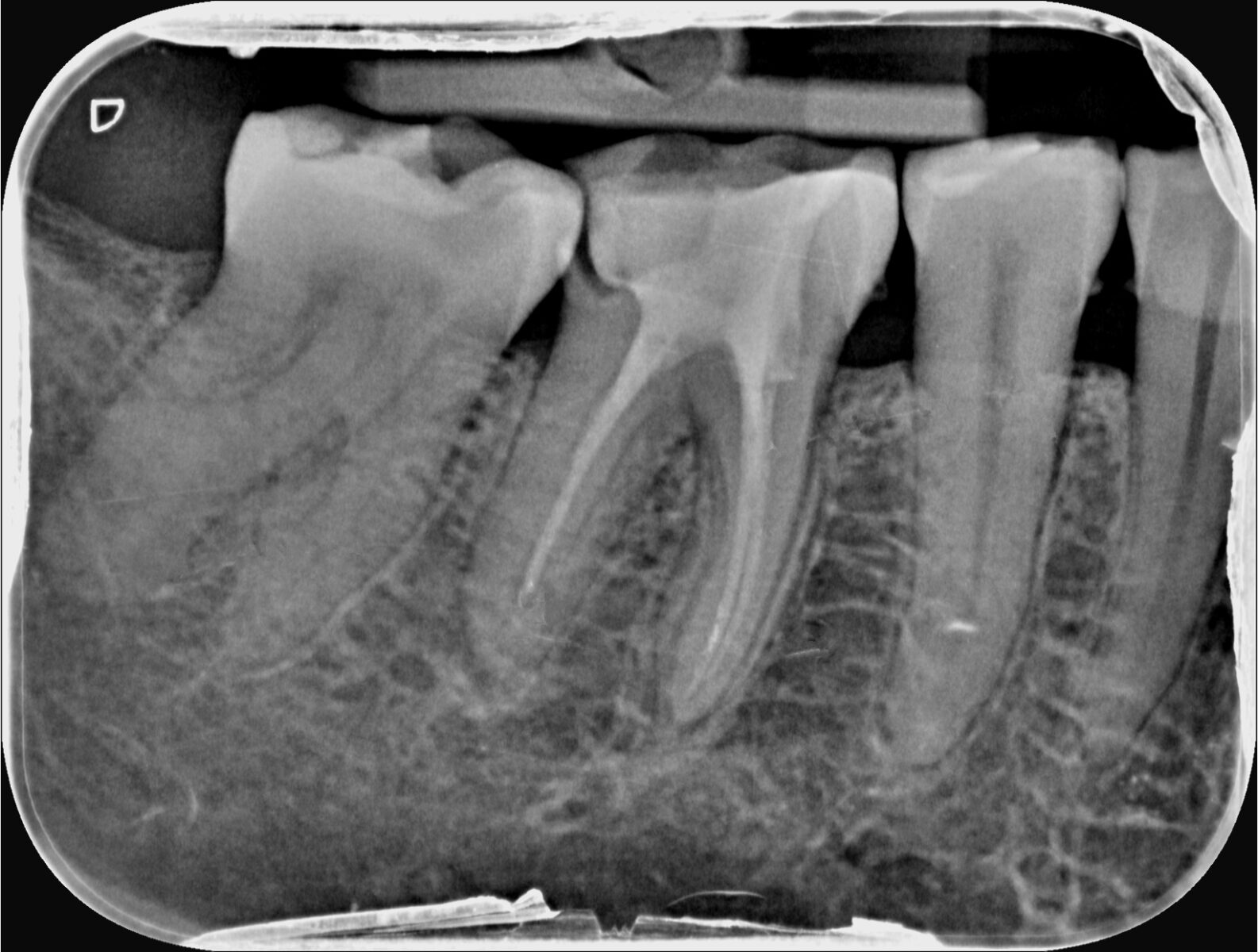
Preoperative radiographs revealed the complex anatomy: a standard three-rooted molar plus an additional disto-lingual root (Radix Entomolaris). The primary difficulty was safely negotiating and shaping the highly curved canal in the extra root without creating ledges, transportation, or altering the original canal path, while preserving maximum tooth structure.
Treatment Protocol
Access Cavity & Canal Identification
A conservative access cavity was designed to preserve pericervical dentin. Under the dental operating microscope, four distinct canal orifices were clearly identified and mapped:
- Mesio-buccal (MB)
- Mesio-lingual (ML)
- Disto-buccal (DB)
- Disto-lingual (DL) — belonging to the Radix Entomolaris
Glide Path & Shaping with DENCO Kite Gold
Mechanical preparation of the complex root canal system was performed using the DENCO Kite Gold rotary system. The controlled memory technology and advanced metallurgy of the Kite Gold files were crucial in managing the severe curvature of the Radix root.
These instruments allowed safe navigation through the acute curves while maintaining the original canal anatomy and preventing any ledge formation or transportation. The system delivered excellent centering ability and flexibility throughout the procedure.
Irrigation & Obturation
The final irrigation protocol included 5.25% NaOCl and 17% EDTA with active ultrasonic activation to ensure deep cleaning of the entire endodontic space, including hard-to-reach areas in the curved Radix canal.
Obturation was completed using the warm vertical compaction technique. This method provided a dense, three-dimensional fill with excellent adaptation to the complex anatomy.
Treatment Outcome
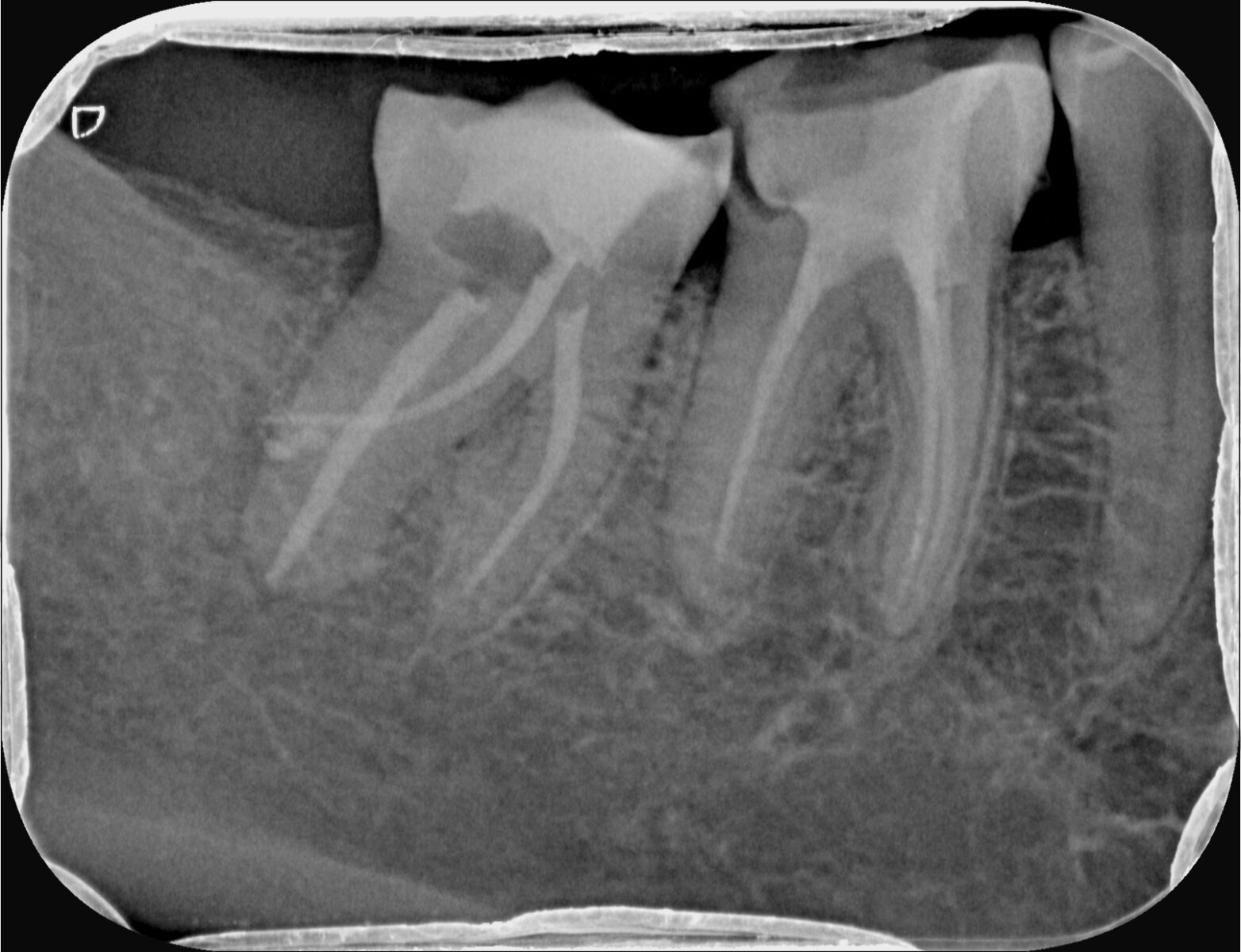
Postoperative radiographs confirmed:
- Successful location and treatment of all four canals (MB, ML, DB, DL)
- Excellent preservation of pericervical dentin thanks to the conservative access
- No ledge formation or canal transportation
- Dense three-dimensional obturation with precise apical control and maintained original root anatomy
When the extra root curves hard, Kite Gold stays in control.
Clinical Takeaways
Managing Radix Entomolaris requires meticulous access design, microscopic visualization, and highly flexible rotary instruments with controlled memory properties. The DENCO Kite Gold system proved highly effective in this challenging scenario, allowing predictable shaping and sealing while prioritizing long-term structural integrity of the tooth.
This case highlights the importance of respecting complex root canal anatomy — especially in teeth with supernumerary roots — through conservative techniques and advanced file systems.