










 Home
Home
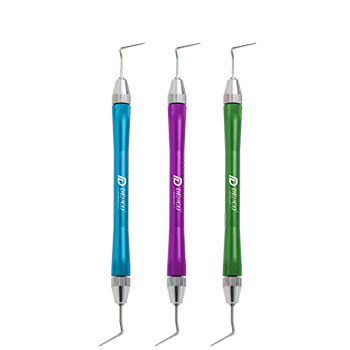
Replaceable Gutta
Percha Plugger
Learn More


Author: Andreas Louloudiadis
Location: United Kingdom
Category: Conservative Treatment
Not every patient can immediately afford a new crown. In clinical practice this is a reality we encounter more often than we might expect. In this particular case, the patient was keen to preserve the existing restoration. After a thorough discussion of the risks and benefits, we agreed on a conservative treatment approach. Good communication and informed consent are essential in these situations, as they form the foundation of ethical and effective patient care.
The tooth in question was a posterior tooth requiring endodontic treatment. The patient was unable to afford a new crown at the time, so the existing restoration needed to be preserved. The treatment plan was carefully adapted following an informed consent process and a clear risk-benefit discussion. The priority was to achieve a successful endodontic outcome without compromising the structural integrity of the tooth or the existing restoration.
The central challenge was clear: how to achieve thorough chemomechanical debridement and a predictable seal while preserving the existing restoration and maximising pericervical dentine (PCD). Preserving PCD is critical for long-term tooth strength and fracture resistance, especially when a full-coverage restoration cannot be replaced immediately.
Using the DENCO Chameleon Dual Shaper, shaping was kept as conservative as possible. The goal was to preserve valuable pericervical dentine while still respecting the original canal anatomy. The file’s heat-treated alloy, nano-surface technology, laser quenching, and dual cross-sectional design allowed efficient shaping with excellent flexibility and control.
These material and design features enabled a centred preparation that avoided unnecessary removal of tooth structure. By staying conservative, we maintained the structural integrity of the tooth while still creating sufficient space for effective irrigation and obturation. This approach demonstrates that modern file systems can support both biological principles and practical clinical constraints.
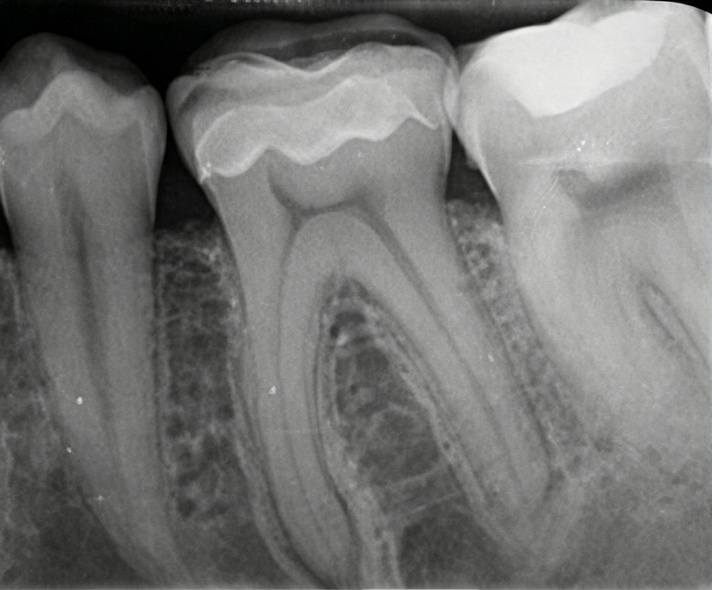
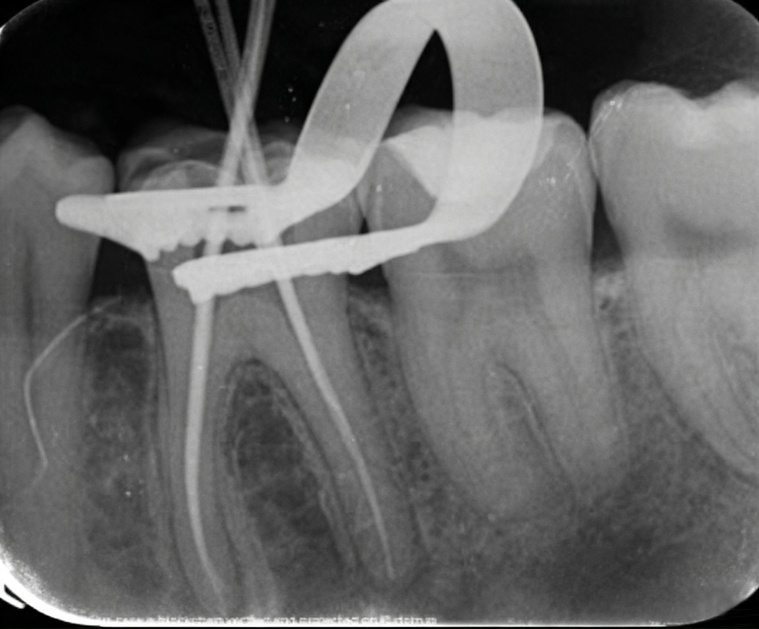
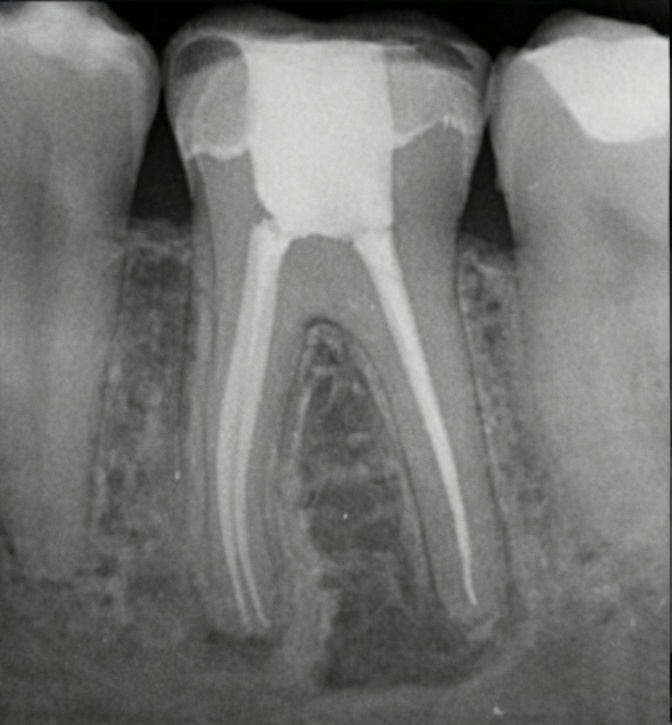
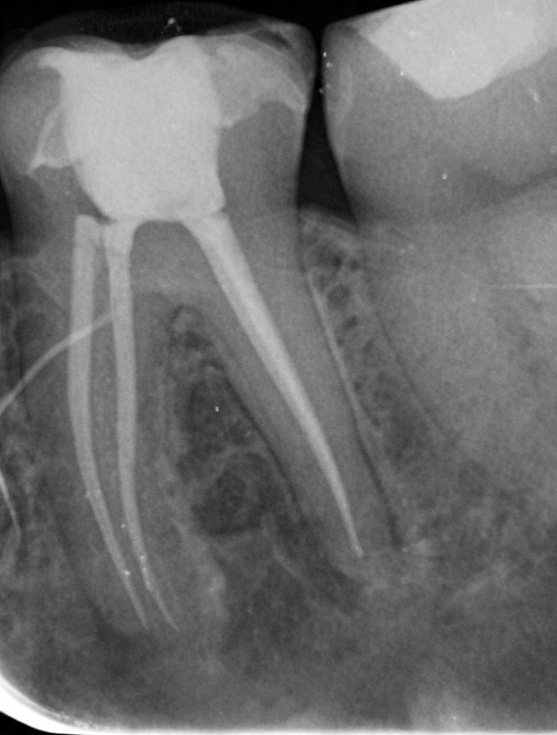
Disinfection was achieved using a standard irrigation protocol: 5.25% sodium hypochlorite (NaOCl), 17% EDTA, and a final rinse with distilled water. Irrigant delivery was performed with Irriflex, followed by EDDY sonic activation. This combination maximised cleaning efficacy despite the conservative preparation size.
Even with limited shaping, the combination of precise irrigant delivery and sonic activation helped ensure thorough removal of debris and biofilm. This step is particularly important when the preparation is intentionally kept minimal, as it compensates for the reduced mechanical debridement and supports a predictable biological outcome.
The canals were obturated using a bioceramic sealer and matched gutta-percha cones. This technique achieved a predictable three-dimensional seal while continuing to preserve tooth structure. The matched cones and bioceramic sealer provided excellent adaptation and sealing properties without the need for aggressive enlargement of the canal space.
By prioritising a high-quality seal over excessive preparation, the treatment maintained the structural advantages of the conservative approach. The result was a well-sealed root canal system that supported the long-term health of the tooth under the existing restoration.
The treatment successfully addressed the clinical challenge. Shaping with the DENCO Chameleon Dual Shaper — supported by its heat-treated alloy, nano-surface technology, and dual cross-section — enabled a conservative, centred preparation with preserved PCD. Irrigation with Irriflex and EDDY sonic activation (using 5.25% NaOCl, 17% EDTA, and distilled water) delivered effective disinfection despite the minimal shaping. Obturation with bioceramic sealer and matched gutta-percha achieved a three-dimensional seal without compromising tooth structure.
Sometimes, successful endodontics is not only about treating the tooth — it is about understanding the patient’s circumstances and delivering the best possible biological outcome with the resources available. In this case, the combination of careful planning, conservative instrumentation, thorough disinfection, and a high-quality seal allowed us to meet both clinical and patient needs.
Conservative treatment. Predictable biology. Patient-centred care.